Bread: The Food of the Masses from Ancient Times to the Modern Table
Bread is one of the oldest foods ever made by humans, and to this day it remains a staple food in nearly every culture in the world. From simple white bread to butter-layered croissants, all of them are rooted in one basic idea: mixing flour with water, then cooking it into something edible and long-lasting.
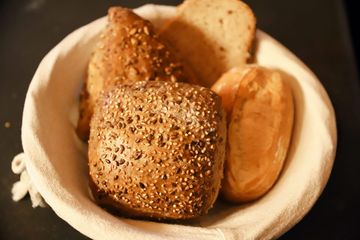
The history of bread is believed to have begun around 14,000 years ago, long before humans practiced agriculture. Archaeologists have found remains of flatbread at a Natufian site, an area that is now part of Jordan, made from wild grains that were coarsely ground and then baked on hot stones. This proves that bread existed before humans cultivated crops systematically.
When the agricultural revolution began around 10,000 BCE, wheat started to be widely cultivated in the Fertile Crescent (Middle East). From this point, bread began to develop into a staple food, because wheat was much easier to grow and process than the wild grains of earlier times.
Ancient Egypt played a major role in the history of bread, especially regarding the discovery of yeast. The Egyptians are believed to have been the first people to accidentally discover the fermentation process, when a mixture of flour and water was left too long and began to rise because of wild yeast in the air. From this emerged bread that was softer and more porous, different from the flatbreads that had come before.
The Romans later perfected bread-making techniques and turned it into an industry. They built large bakeries, introduced water-powered mills, and even had “subsidized bread” for the poor in Rome. From then on, bread became a symbol of prosperity as well as a political tool.
In medieval Europe, bread became a marker of social class. Fine white bread could only be enjoyed by the nobility, while common people ate dark bread made from coarser and cheaper rye or barley. The color of bread, quite literally, reflected a person’s economic status.
The basic ingredients of bread are actually very simple: flour, water, salt, and yeast (or a natural starter). These four ingredients alone are enough to make classic breads such as sourdough or the French baguette, which is famous for the simplicity of its recipe.
Flour is the main foundation of bread, and the type of flour determines its final texture. High-protein wheat flour (bread flour) produces bread that is chewy with large air holes, while low-protein flour is suitable for softer and denser breads such as cakes or pull-apart bread.
Yeast acts as the “engine” that makes bread rise. Yeast consumes the sugars in the dough and produces carbon dioxide gas, which becomes trapped in the gluten network, causing the dough to expand. This process is called fermentation, and the length of fermentation greatly affects the flavor and aroma of the bread.
Salt is not only about taste, but also has a technical function. Salt controls yeast activity so that the dough does not rise too quickly, while also strengthening the gluten structure so that the bread has an even texture and does not easily collapse.
Water, although it may seem trivial, greatly determines the final result of bread. The amount of water affects the hydration level of the dough — the higher the hydration, the moister and more open-crumbed the bread, as seen in ciabatta or modern artisan bread.
In addition to these four basic ingredients, many modern breads add fats such as butter, oil, or milk to make the texture softer and longer-lasting, for example brioche and sandwich bread. Eggs are also often added to give a golden color and a richer texture.
In terms of types, the world of bread is very diverse: there is soft and practical sandwich bread; baguette that is crispy on the outside but soft inside; sourdough with its distinctive sour taste from natural fermentation; and flatbreads such as pita, naan, and tortilla that do not use yeast at all.
Interestingly, unleavened flatbread actually existed first and has survived to this day in many cultures, from Indian chapati and Armenian lavash to Malaysian roti canai. This shows that “leavened bread” is not the only true way to make bread — everything depends on tradition and the ingredients available in a region.
In the modern era, bread has also developed into a mass-produced industrial product with additives such as preservatives and instant leaveners, so that it can be produced quickly and last longer on supermarket shelves. But recently there has been a trend back to artisan bread and homemade sourdough, as a reaction to factory-made bread that is considered less “honest” in terms of ingredients and process.
In my opinion, what makes bread unique compared to other staple foods is its flexibility. Bread can be a luxury food (French croissant) or a food of the people (flatbread in traditional markets); it can be sweet or savory; it can be a breakfast item or the base of other dishes such as sandwiches, burgers, and even pizza.
In the end, bread is not just about flour that is baked, but a reflection of history, culture, and the way humans adapt to the ingredients around them. From the hot stones of the Natufian desert to electric ovens in modern kitchens, one thing has not changed: bread remains a universal symbol of food that unites people across ages and continents.