OBSRVR

Kumpulan catatan singkat dan observasi dari FZH, diurutkan dari yang paling baru.

#Markdown

This is the OBSRVR template blog made with Eleventy. In this part I'll explain a…

This is the OBSRVR template blog made with Eleventy. In this part I'll explain a bit about the markdown features so you can see what you can do with this blog template.

It's made with Eleventy as the engine and the code is stored on GitHub, and Netlify spreads the page across the world.

To edit, such as making a post or deleting a post, you can download the GitHub native app. It's simple, but already enough to make simple changes and commit them.

This is a numbered list

  1. I don't know what to say
  2. Again, I still don't know what to say

And this uses bullets or stars

  • Still don't know what to say
  • Yep, don't know what to say

This is a blockquote so you can quote anything you like here on your blog.

This is bold and this is italic and this is inline code, and below is a code block.

This is **bold** and this is *italic* and this is `inline code`, and below is a code block.

To highlight things you just write like this, you just put it like this <mark>

This is a URL link and you can tap it and this is an image, just write it like this

![it](https://fzh.netlify.app/images/5.webp)

and it'll look like this:

sample

sample

sample

sample

fzh

That's the short explanation about the markdown magic on this blog, see ya.

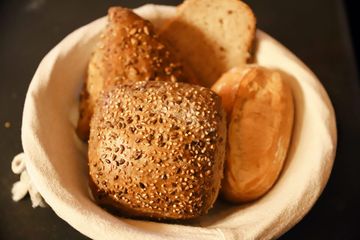
#Bread

Bread: The Food of the Masses from Ancient Times to the Modern Table Bread is on…

Bread: The Food of the Masses from Ancient Times to the Modern Table

Bread is one of the oldest foods ever made by humans, and to this day it remains a staple food in nearly every culture in the world. From simple white bread to butter-layered croissants, all of them are rooted in one basic idea: mixing flour with water, then cooking it into something edible and long-lasting.

fzh

The history of bread is believed to have begun around 14,000 years ago, long before humans practiced agriculture. Archaeologists have found remains of flatbread at a Natufian site, an area that is now part of Jordan, made from wild grains that were coarsely ground and then baked on hot stones. This proves that bread existed before humans cultivated crops systematically.

When the agricultural revolution began around 10,000 BCE, wheat started to be widely cultivated in the Fertile Crescent (Middle East). From this point, bread began to develop into a staple food, because wheat was much easier to grow and process than the wild grains of earlier times.

Ancient Egypt played a major role in the history of bread, especially regarding the discovery of yeast. The Egyptians are believed to have been the first people to accidentally discover the fermentation process, when a mixture of flour and water was left too long and began to rise because of wild yeast in the air. From this emerged bread that was softer and more porous, different from the flatbreads that had come before.

The Romans later perfected bread-making techniques and turned it into an industry. They built large bakeries, introduced water-powered mills, and even had “subsidized bread” for the poor in Rome. From then on, bread became a symbol of prosperity as well as a political tool.

In medieval Europe, bread became a marker of social class. Fine white bread could only be enjoyed by the nobility, while common people ate dark bread made from coarser and cheaper rye or barley. The color of bread, quite literally, reflected a person’s economic status.

The basic ingredients of bread are actually very simple: flour, water, salt, and yeast (or a natural starter). These four ingredients alone are enough to make classic breads such as sourdough or the French baguette, which is famous for the simplicity of its recipe.

Flour is the main foundation of bread, and the type of flour determines its final texture. High-protein wheat flour (bread flour) produces bread that is chewy with large air holes, while low-protein flour is suitable for softer and denser breads such as cakes or pull-apart bread.

Yeast acts as the “engine” that makes bread rise. Yeast consumes the sugars in the dough and produces carbon dioxide gas, which becomes trapped in the gluten network, causing the dough to expand. This process is called fermentation, and the length of fermentation greatly affects the flavor and aroma of the bread.

Salt is not only about taste, but also has a technical function. Salt controls yeast activity so that the dough does not rise too quickly, while also strengthening the gluten structure so that the bread has an even texture and does not easily collapse.

Water, although it may seem trivial, greatly determines the final result of bread. The amount of water affects the hydration level of the dough — the higher the hydration, the moister and more open-crumbed the bread, as seen in ciabatta or modern artisan bread.

In addition to these four basic ingredients, many modern breads add fats such as butter, oil, or milk to make the texture softer and longer-lasting, for example brioche and sandwich bread. Eggs are also often added to give a golden color and a richer texture.

In terms of types, the world of bread is very diverse: there is soft and practical sandwich bread; baguette that is crispy on the outside but soft inside; sourdough with its distinctive sour taste from natural fermentation; and flatbreads such as pita, naan, and tortilla that do not use yeast at all.

Interestingly, unleavened flatbread actually existed first and has survived to this day in many cultures, from Indian chapati and Armenian lavash to Malaysian roti canai. This shows that “leavened bread” is not the only true way to make bread — everything depends on tradition and the ingredients available in a region.

In the modern era, bread has also developed into a mass-produced industrial product with additives such as preservatives and instant leaveners, so that it can be produced quickly and last longer on supermarket shelves. But recently there has been a trend back to artisan bread and homemade sourdough, as a reaction to factory-made bread that is considered less “honest” in terms of ingredients and process.

In my opinion, what makes bread unique compared to other staple foods is its flexibility. Bread can be a luxury food (French croissant) or a food of the people (flatbread in traditional markets); it can be sweet or savory; it can be a breakfast item or the base of other dishes such as sandwiches, burgers, and even pizza.

In the end, bread is not just about flour that is baked, but a reflection of history, culture, and the way humans adapt to the ingredients around them. From the hot stones of the Natufian desert to electric ovens in modern kitchens, one thing has not changed: bread remains a universal symbol of food that unites people across ages and continents.

#Coffee

Coffee: From the Legend of the Ethiopian Goat to the World’s Favorite Drink Coff…

Coffee: From the Legend of the Ethiopian Goat to the World’s Favorite Drink

fzh

Coffee is one of the most popular beverages in the world, consumed by billions of people every day in various forms — from strong espresso to trendy sweet milk coffee. But behind the everyday cup of coffee we enjoy, there is a long history involving legend, trade, and even global politics.

Simply put, coffee is a drink made from the seeds of the coffee plant (genus Coffea) that are roasted, ground, and then brewed with hot or cold water. Coffee beans are actually the seeds of a small berry called a "coffee cherry," and each fruit usually contains two seeds.

The origins of coffee are believed to trace back to the highlands of Ethiopia, specifically the region now known as Kaffa — which is said to be the origin of the word "coffee" itself. The most famous legend tells of a goat herder named Kaldi, who noticed that his goats became very energetic and unable to sleep after eating red berries from a certain bush.

Kaldi then tried the berries himself and felt the same effect. He brought his discovery to a nearby monastery, where a monk tried processing the seeds of the berries into a drink to help stay awake during evening prayers. Although this story is more like folklore than verified historical fact, it remains the most popular origin story of coffee passed down through generations.

From Ethiopia, coffee later spread to the Arabian Peninsula, particularly Yemen, around the 15th century. It was here that coffee began to be cultivated seriously and brewed in a way similar to modern methods. The city of Mocha in Yemen even became an important coffee trading center, and its name has been preserved to this day as the term "mocha" in the coffee world.

Coffee then spread to the Ottoman Empire, where the world’s first coffeehouses, called "qahveh khaneh," appeared in Constantinople (now Istanbul). These coffeehouses became places where people gathered to chat, play chess, listen to music, and even discuss politics — the forerunner of the coffeehouse culture we know today.

From the Middle East, coffee entered Europe through Venetian traders around the 17th century. At first, coffee was suspected by the Catholic Church of being the "devil’s drink" because it came from the Muslim world, but Pope Clement VIII is said to have tasted it himself and actually liked it, so coffee was eventually "blessed" for consumption by European Christians.

Coffeehouses then sprang up in major European cities such as London, Paris, and Vienna. In England, coffeehouses were even nicknamed "penny universities" because for the price of a cheap cup of coffee, people could sit for hours discussing science, politics, and business with intelligent people there.

The spread of coffee around the world was also closely linked to colonialism. Europeans began bringing coffee seedlings to their tropical colonies, such as Indonesia (brought by the Dutch), Latin America, and the Caribbean, because coffee plants thrive in highlands with tropical and subtropical climates.

Indonesia itself played an important role in world coffee history, as the Dutch made Java one of the largest coffee producers in the 18th and 19th centuries. This is where the English phrase "a cup of Java" originated, which remains a slang term for a cup of coffee to this day.

fzh

In terms of types, there are two main coffee species that dominate the world market: Arabica and Robusta. Arabica is known for having a smoother taste, slight acidity, and complex aroma, but it is more difficult to cultivate because it is susceptible to pests and requires cool highlands.

Robusta, as its name suggests, is much hardier — resistant to pests, able to grow in lowlands, and it has nearly twice the caffeine content of Arabica. Its taste tends to be more bitter and earthy, and it is often used in espresso blends or instant coffee because it is cheaper and its production is more stable.

Besides these two main species, there are also Liberica and Excelsa, which are much rarer and usually grow in Southeast Asian regions such as the Philippines and Malaysia. Liberica has a unique aroma sometimes described as resembling jackfruit or wood, quite different from the character of Arabica or Robusta.

In addition to species, coffee is also categorized by the processing method after the beans are harvested — there is the natural process (dried directly with the fruit skin on), the washed/full wash process (the fruit skin is removed before drying), and the honey process (some of the fruit flesh remains attached during drying). Each method produces a different flavor profile, even from the same bean.

Roast level also greatly affects the final taste of coffee. Light roast preserves the original character of the bean with a more acidic and complex taste, medium roast is more balanced, while dark roast has a bitter and smoky taste due to the longer roasting process and higher temperatures.

In my opinion, what makes coffee so interesting compared to other beverages is its almost limitless diversity — from the same bean, the final result can be very different depending on where it is grown (terroir), the processing method, the roast level, and even the brewing method (French press, espresso, pour over, Indonesian-style tubruk). This is what keeps the world of coffee evolving into both a culture and a massive industry to this day.

#Recipe

Getting to Know the World’s Types of Bread and a Simple, Fail-Proof Bread Recipe…

Getting to Know the World’s Types of Bread and a Simple, Fail-Proof Bread Recipe

The world of bread is far broader than just the white bread on supermarket shelves. Every country has its own version of bread, with different textures, shapes, and cooking methods depending on local traditions and the ingredients available in that region.

Croissant from France is one of the most iconic breads in the world, known for its layered texture that is crispy on the outside but soft on the inside. The secret lies in the “laminating” technique, which involves repeatedly folding the dough with layers of butter so that during baking, steam from the butter creates hundreds of thin, flaky layers.

Baguette, also from France, has a different character — a hard, crackly outer crust, but a soft interior with large, irregular air pockets. Baguette uses only four basic ingredients: flour, water, salt, and yeast, but it is the long fermentation technique that gives it such a distinctive flavor.

Sourdough is a bread with a truly unique history because it does not use instant yeast at all. It relies on a natural “starter,” a mixture of flour and water that is fermented for several days until a colony of wild yeast and beneficial bacteria forms, giving the bread its characteristic sour taste and chewy texture.

Brioche from France falls into the sweet, rich bread category because its dough is mixed with plenty of butter, eggs, and a little sugar. The result is a super-soft bread with a golden-yellow color and a flavor close to cake, often used for French toast or premium burger buns.

Ciabatta from Italy is famous for its large air pockets and chewy texture, the result of a high-hydration dough (one that contains a lot of water). Its flat, elongated shape resembles a slipper — matching the meaning of its name in Italian — and it is often used for sandwiches or panini.

Naan from India and roti canai from Malaysia are examples of flatbreads cooked on a flat griddle or in a tandoor rather than in an oven. Naan usually includes yogurt in the dough, making it soft and slightly chewy, while roti canai is known for the technique of folding and stretching the dough until it forms many thin layers.

Bagels from Eastern Europe have a unique cooking method: the dough is briefly boiled before being baked. This boiling process gives the bagel a chewy, shiny outer crust, unlike regular baked bread, which has a softer texture.

Pretzels from Germany use a similar trick: they are dipped in an alkaline solution (usually baking soda or lye) before baking, which gives them their characteristic dark brown color and a savory, slightly bitter flavor on the crust.

Despite the many types of bread, they are all rooted in the same principle: flour, liquid, and fermentation. The only differences lie in the ingredient ratios, folding techniques, and cooking methods. That means if you understand the basic recipe, you already have the foundation to explore other types of bread.

Now let’s move to the practical part — a simple, fail-proof white bread recipe that is perfect for beginners just learning to bake at home.

Ingredients:

  • Bread flour (high-protein wheat flour): 500 grams
  • Warm water (around 37°C / 98°F): 300 ml
  • Instant yeast: 7 grams (1 sachet)
  • Granulated sugar: 30 grams
  • Salt: 8 grams
  • Butter/vegetable oil: 30 grams (or 30 ml if using oil)
  • Milk powder (optional, makes the bread softer): 15 grams

Step 1: Mix the instant yeast with the warm water and a little sugar. Let it sit for 5–10 minutes until foamy. This is a sign that the yeast is still active and ready to use — if it does not foam, the yeast may be dead and should be replaced with fresh yeast.

Step 2: In a large bowl, combine the flour, remaining sugar, salt, and milk powder. Stir the dry ingredients until evenly mixed before adding the liquid.

Step 3: Pour the yeast-water mixture into the dry ingredients and knead until the dough is partially smooth, then add the butter. Continue kneading for about 10–15 minutes until the dough is smooth and elastic — the sign is that when stretched thinly, the dough does not tear easily (known as the “windowpane test”).

Step 4: Shape the dough into a ball, place it in a lightly oiled bowl, cover with a damp cloth, and let it rise in a warm place for 60–90 minutes until doubled in size. Then punch down the dough to release excess gas, shape it to fit your loaf pan, let it rest again for 30–45 minutes (second proofing), and bake in an oven at 180°C (350°F) for 25–30 minutes until the surface is golden brown.

Once you have mastered this basic recipe, you can start experimenting: reduce the sugar and butter for a leaner version like a baguette, increase the water content for a texture similar to ciabatta, or replace some of the instant yeast with a sourdough starter if you want to try a naturally sour flavor. In essence, all the breads of the world are variations of the same basic recipe — it is just a matter of experimenting with ingredient ratios and techniques.

#Colonialism

From the Bankruptcy of the VOC to the Cultivation System: The Beginning of Direc…

From the Bankruptcy of the VOC to the Cultivation System: The Beginning of Direct Dutch Colonialism in the Archipelago

After more than 190 years of operating as a giant trading company, the VOC was officially dissolved on December 31, 1799. The primary cause was its massive bankruptcy, resulting from rampant internal corruption, escalating military expenses to maintain its territorial holdings, and debts that had accumulated over the years without being repaid.

When the VOC was dissolved, all of its assets, territorial possessions, debts, and administrative responsibilities were handed over directly to the government of the Batavian Republic (the Dutch government at the time, which was a puppet state under French influence following the French Revolution). This marked a major shift: the archipelago, which had previously been controlled by a private trading company, now officially became a colonial territory of the state.

The early transitional period following the VOC's demise was rather chaotic, as the political situation in Europe itself was in turmoil due to the Napoleonic Wars. There was even a brief period when the British took control over Java (1811–1816) under Thomas Stamford Raffles, before the territory was eventually returned to the Dutch through the Convention of London in 1814.

Once the Dutch regained full control, they established an official colonial government called the Dutch East Indies (Nederlandsch-Indië), with a much more centralized and systematic administrative structure compared to the VOC era. Whereas the VOC had been purely profit-oriented in its trading operations, the Dutch East Indies now operated as a full-fledged colonial entity, with political, legal, and military power wielded directly under the authority of the Kingdom of the Netherlands.

However, in the early 19th century, the financial condition of the Kingdom of the Netherlands itself was in a dire state. The Napoleonic Wars had drained the state treasury, and in addition, the Dutch had to finance the Java War, also known as the Diponegoro War (1825–1830), which lasted five years, incurred enormous costs, and claimed the lives of hundreds of thousands of indigenous people and Dutch troops alike.

It was this financial crisis that prompted Governor-General Johannes van den Bosch to introduce a new economic policy in 1830, which would later become known as the Cultuurstelsel, or in Indonesian, the Cultivation System (Sistem Tanam Paksa). Its goal was simple yet ruthless: to maximize profits from the colony in order to rescue the nearly bankrupt treasury of the Kingdom of the Netherlands.

The core of the Cultivation System required indigenous farmers in Java (and later extended to other regions) to cultivate export commodity crops, such as sugarcane, indigo, coffee, and tobacco, on a portion of their land—ideally one-fifth of their total agricultural land, though in practice, it often amounted to much more than that.

The yields from these mandatory crops then had to be delivered to the colonial government at prices unilaterally set by the Dutch, far below international market rates. If the value of the harvest was deemed to exceed the farmers' land tax obligations, the surplus was supposedly to be returned to them as compensation, though in practice, this was rarely done fairly.

In theory, the system sounded fairly structured, but its implementation on the ground was far more brutal. Local officials (regents and village heads) were often coerced into meeting extremely high production targets set by the colonial government, which in turn led them to pressure the people through harsh means—including forcing farmers to plant export commodities even on land that should have been used for growing rice, the staple food.

As a result, many regions in Java experienced severe famines because land for food crops had been drastically reduced, while the people's labor was completely absorbed by the cultivation of export crops. Several areas, such as Cirebon and Demak, were recorded as having suffered severe famine disasters during the 1840s as a consequence of this policy, with very high death tolls.

On the other hand, from the perspective of the Dutch economy, the Cultivation System proved to be highly profitable. The policy successfully rescued the finances of the Kingdom of the Netherlands, which had been on the verge of bankruptcy, and even generated a large surplus known as the batig slot, which was subsequently used to finance infrastructure development in the Netherlands itself, including railways and other public projects.

The Cultivation System also introduced something new to the economic history of the archipelago: the full integration of the indigenous economy into the global capitalist system, albeit in a highly exploitative manner. For the first time, the agricultural produce of the archipelago was mass-produced not for local consumption, but purely to meet the demands of the world market, which was entirely controlled by colonial interests.

Criticism of the Cultivation System began to emerge, both from indigenous circles and from within the Netherlands itself. One of the most famous critiques came through the novel Max Havelaar (1860) by Multatuli (the pen name of Eduard Douwes Dekker), a former colonial official who vividly depicted the suffering of the Javanese people under the oppression of the Cultivation System and the corruption of local officials.

The novel had a profound impact in the Netherlands, opening the eyes of the European public to the dark side of colonialism that had long been concealed for the sake of economic gain. This public pressure ultimately gave rise to a new political movement in the Netherlands, which demanded comprehensive reform of colonial policy.

As a result of this pressure, the Cultivation System was gradually phased out starting in 1870, with the enactment of the Agrarian Law (Agrarische Wet), which opened the Dutch East Indies to private investment. This era later became known as the period of the Liberal Policy (Politik Pintu Terbuka), which gradually replaced the Cultivation System with a system of private plantations based on foreign capital.

In my view, the transition from the VOC to the Cultivation System reveals a consistent pattern throughout colonial history: every time the economic interests of the colonizer were threatened, the colonized people were the ones who bore the heaviest burden. The VOC went bankrupt due to corruption and war, but it was the Javanese farmers who paid the price through the Cultivation System—a pattern of exploitation that continued to repeat itself in various forms throughout the history of the Dutch East Indies.

#VOC

VOC: The Dutch Trading Company That Ruled the Archipelago for Nearly 200 Years T…

VOC: The Dutch Trading Company That Ruled the Archipelago for Nearly 200 Years

The VOC, or Vereenigde Oostindische Compagnie (often called "the Company" in Indonesian), was a Dutch trading company founded in 1602. The VOC was not just an ordinary company; it was a merger of several small Dutch trading companies that had previously competed with one another for spices from the Indonesian archipelago.

The background to the founding of the VOC began with intense competition in the spice trade among Dutch traders themselves, which actually caused spice prices to fall and harmed them all. The Dutch government, the Republic of the Seven United Provinces, then took the initiative to combine these companies into one giant trading company so that they could compete more effectively against Portuguese and Spanish traders, who had already controlled the spice routes.

The Dutch first came to Indonesia in the late 16th century; an early Dutch expedition, before the VOC was formally established, arrived in Banten in 1596 led by Cornelis de Houtman. However, the VOC as an official organization was only founded in 1602, and from then on it began systematically building a trading network and power in the archipelago.

What made the VOC different from an ordinary trading company were the special rights, known as octrooi, granted by the Dutch government. The VOC was given a monopoly on trade, the right to mint its own money, the right to appoint officials, the right to build forts, and even the right to declare war and make peace with local rulers — in practice, the VOC functioned like a state within a state.

The VOC's headquarters in the archipelago was located in Batavia, now Jakarta, which was seized and rebuilt by Jan Pieterszoon Coen in 1619 on the ruins of the city of Jayakarta. Batavia was chosen because of its strategic position on the shipping route between the Sunda Strait and the Strait of Malacca, and because it was close to the main spice-producing centers.

Besides Batavia, the VOC also built a network of trading posts and forts in various parts of the archipelago: the Moluccas, especially Ambon and Banda, as the center of cloves and nutmeg; Makassar in Sulawesi; Banten in West Java; and areas in Sumatra and Kalimantan. Each post was headed by a governor or resident who reported to the center in Batavia.

The VOC's way of operating was very distinctive and brutal for its time. They implemented a strict monopoly system through forced agreements with local kingdoms. Kingdoms that lost wars or were trapped in trading debts were forced to sign contracts requiring them to sell their produce, especially spices, only to the VOC, at prices determined unilaterally by the VOC itself.

One of the VOC's most famous and cruel practices was the hongi tochten, or hongi voyages, in the Moluccas. These were military expeditions using small boats to destroy clove and nutmeg plantations outside the areas they controlled. The aim was simple: to keep spice prices high by forcibly limiting production, even if it meant using violence against the local population.

The VOC was also known for its divide-and-rule strategy, divide et impera, or playing local kingdoms against one another. They often exploited internal conflicts within the kingdoms of the archipelago, such as succession disputes or civil wars, by supporting one side in exchange for exclusive trading rights or additional territory.

In terms of business structure, the VOC was managed by a board of directors called the Heeren XVII, or the Seventeen Gentlemen, in the Netherlands, which determined the company's major policies. In the archipelago itself, the highest authority was held by the Governor-General based in Batavia, with Jan Pieterszoon Coen as one of the most famous governors-general because of his harsh and expansionist policies.

The main commodities traded by the VOC were spices — especially cloves and nutmeg from the Moluccas, and pepper from Sumatra and Java. These spices were extremely valuable in the European market because they were used as food preservatives, medicines, and cooking spices, which at that time were very rare and expensive in Europe.

Over time, besides spices, the VOC also became involved in trading other commodities, such as coffee, tea, sugar, textiles from India, and porcelain from China and Japan, making the VOC the first truly integrated global trading network connecting continents.

The VOC reached its peak from around the late 17th century to the mid-18th century, when it became the most valuable company in the world at the time. It is even said to have been the first multinational corporation in modern history, complete with shares that were traded on the Amsterdam stock exchange.

However, that glory did not last forever. Throughout the 18th century, the VOC began to decline due to rampant internal corruption among its employees, soaring operational and military costs to maintain its territories, and trade competition from other European companies such as the English East India Company, or EIC.

The VOC's financial condition continued to deteriorate until the company was officially dissolved on 31 December 1799, declared bankrupt with enormous debts. All of its assets, territories, and debts were then taken over directly by the Dutch government, marking the beginning of direct colonial rule, the Dutch East Indies, in the archipelago.

The VOC's legacy in Indonesia is long and complex. On one hand, the VOC built trading infrastructure, port cities, and an administrative network that later became the foundation of the Dutch East Indies colonial system. But on the other hand, the VOC's forced monopoly practices, forced labor, and violence left deep historical wounds, including the destruction of local economies and the suffering of the archipelago's people during nearly two centuries of their rule.

In my opinion, the VOC is interesting to study precisely because of its unique status — it was not a state, yet it had powers equivalent to a state; it was not an official army, yet it fought wars and colonized for the profit of its shareholders. The VOC is an early example of how capital and business power can turn into political and military power that changes the course of a nation's history.

#Yourself

Getting to Know Yourself: Why Life Is Not a Race and How to Stop Comparing Yours…

Getting to Know Yourself: Why Life Is Not a Race and How to Stop Comparing Yourself to Others

In today's era of social media, we are bombarded every day with snippets of other people's lives that look absolutely perfect—brilliant careers, luxurious vacations, romantic relationships, and financial achievements that make us quietly ask ourselves, "why hasn't my life reached that point yet?" In reality, what we see is merely a highlight reel, not the full picture of the struggles and difficulties they have gone through.

Getting to know yourself is a foundation that many people often overlook, even though it is the key to living a calmer and happier life. Without understanding who we truly are—what we want, what we avoid, and what genuinely makes us happy from within—we will keep chasing other people's standards of living that may not necessarily suit us at all.

One of the main reasons why people find it difficult to know themselves is that they are too busy comparing themselves to others. We forget to ask, "what do I actually want?" and instead busy ourselves with asking, "why am I not like him or her yet?" Yet these two questions point in completely different directions—one stems from within ourselves, while the other stems from external validation.

The concept of life as a "race" is actually a social construct that has been created through various systems—an education system that ranks students, a workplace that measures success through positions and salaries, and social media that gauges a person's value through likes and followers. All of these systems unconsciously instill the idea that life must be compared and ranked.

However, if we think about it more deeply, a race has the same starting line and finish line for all participants. Human life is clearly not like that—every person is born with vastly different family backgrounds, economic conditions, health, opportunities, and challenges. Comparing the achievements of two people with such drastically different starting points is, from the very beginning, an unfair comparison.

Constant social comparison also has quite damaging psychological effects. Research in the field of psychology shows that the habit of excessively comparing oneself is closely linked to increased feelings of anxiety, low self-esteem, and even symptoms of depression, because our brains continuously focus on what is "lacking" in ourselves, rather than on what we already have and have achieved.

One of the first steps toward knowing yourself is to honestly recognize your personal values what truly matters to us, not what matters according to our parents, friends, or social standards. For instance, there are people who are genuinely happy living a simple life with plenty of free time, while there are also those who are indeed motivated by high career achievement—and both are equally valid, as long as they are conscious choices, not merely following the crowd.

Regular self-reflection is also a crucial part of this process. Taking the time to ask yourself questions—through journaling, meditation, or simply pondering without the distraction of gadgets—helps us become more attuned to our own feelings and thoughts, rather than constantly reacting to what is happening outside of ourselves.

It is also important to understand that "success" is not a single concept that applies the same way to everyone. One person's definition of success can be vastly different from another's—some measure success through having freedom of time, others through inner peace, others through contributing to other people, and still others through material achievements. The problem arises when we force someone else's definition of success into our own lives.

One effective way to reduce the habit of comparing yourself to others is to shift your focus from "other people" to "your past self." Instead of asking "why am I not like him or her yet," try asking "am I better than the person I was a year ago?" This shift in focus may be small, but its impact on the way we evaluate our own life progress is enormous.

Social media also needs to be consumed consciously, not passively without any filter. If there are certain accounts that make us feel insecure or inferior every time we open them, there is nothing wrong with unfollowing or muting them, because mental health is far more important than merely "keeping up" with other people's lives in the virtual world.

It is also important to realize that failure and a slow pace do not mean we are "losing" in life. Many great achievements are actually born from long processes filled with failures and detours, not the straight, smooth lines often portrayed on social media. People who appear to have "already arrived" at a certain point have usually gone through many failures that we never get to see.

Knowing yourself also means making peace with our own weaknesses and limitations, without having to cover them up or pretend to be perfect. In fact, by honestly accepting our shortcomings, we create more room for growth, because our energy is no longer exhausted by constantly hiding or denying what we truly feel.

A life lived with strong self-awareness is usually more resilient to social pressure. People who truly understand what they want and why they want it will not be easily shaken just because others have a different life path or appear more "successful" on the surface.

It is also important to remember that everyone has their own "timeline" in life. Some get married young, others focus on their careers first; some achieve financial stability quickly, while others only discover their passion in their thirties or even later. There is no fixed rule about "what you should already have at a certain age"—that is merely a social standard that is often irrelevant to each person's unique life circumstances.

In my opinion, ironically, the people who live life most peacefully are usually not those with the most achievements, but rather those who understand themselves the best—who know what they want, accept what they do not yet have, and do not use other people's lives as a benchmark for their own happiness.

In the end, life is not a race with a finish line and a single winner, but rather a unique personal journey for every individual. The sooner we stop comparing ourselves to others and start focusing on knowing and accepting ourselves, the more space we will have to truly enjoy life, rather than merely chasing validation from standards that are not even our own to begin with.

Memuat catatan berikutnya…