Coffee: From the Legend of the Ethiopian Goat to the World’s Favorite Drink

Coffee is one of the most popular beverages in the world, consumed by billions of people every day in various forms — from strong espresso to trendy sweet milk coffee. But behind the everyday cup of coffee we enjoy, there is a long history involving legend, trade, and even global politics.
Simply put, coffee is a drink made from the seeds of the coffee plant (genus Coffea) that are roasted, ground, and then brewed with hot or cold water. Coffee beans are actually the seeds of a small berry called a "coffee cherry," and each fruit usually contains two seeds.
The origins of coffee are believed to trace back to the highlands of Ethiopia, specifically the region now known as Kaffa — which is said to be the origin of the word "coffee" itself. The most famous legend tells of a goat herder named Kaldi, who noticed that his goats became very energetic and unable to sleep after eating red berries from a certain bush.
Kaldi then tried the berries himself and felt the same effect. He brought his discovery to a nearby monastery, where a monk tried processing the seeds of the berries into a drink to help stay awake during evening prayers. Although this story is more like folklore than verified historical fact, it remains the most popular origin story of coffee passed down through generations.
From Ethiopia, coffee later spread to the Arabian Peninsula, particularly Yemen, around the 15th century. It was here that coffee began to be cultivated seriously and brewed in a way similar to modern methods. The city of Mocha in Yemen even became an important coffee trading center, and its name has been preserved to this day as the term "mocha" in the coffee world.
Coffee then spread to the Ottoman Empire, where the world’s first coffeehouses, called "qahveh khaneh," appeared in Constantinople (now Istanbul). These coffeehouses became places where people gathered to chat, play chess, listen to music, and even discuss politics — the forerunner of the coffeehouse culture we know today.
From the Middle East, coffee entered Europe through Venetian traders around the 17th century. At first, coffee was suspected by the Catholic Church of being the "devil’s drink" because it came from the Muslim world, but Pope Clement VIII is said to have tasted it himself and actually liked it, so coffee was eventually "blessed" for consumption by European Christians.
Coffeehouses then sprang up in major European cities such as London, Paris, and Vienna. In England, coffeehouses were even nicknamed "penny universities" because for the price of a cheap cup of coffee, people could sit for hours discussing science, politics, and business with intelligent people there.
The spread of coffee around the world was also closely linked to colonialism. Europeans began bringing coffee seedlings to their tropical colonies, such as Indonesia (brought by the Dutch), Latin America, and the Caribbean, because coffee plants thrive in highlands with tropical and subtropical climates.
Indonesia itself played an important role in world coffee history, as the Dutch made Java one of the largest coffee producers in the 18th and 19th centuries. This is where the English phrase "a cup of Java" originated, which remains a slang term for a cup of coffee to this day.
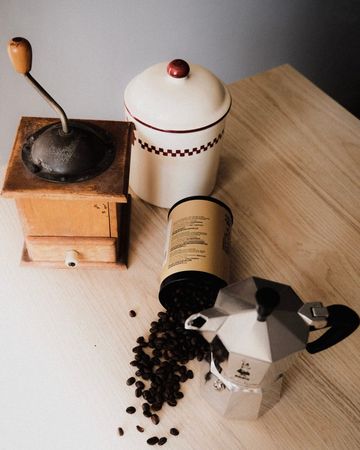
In terms of types, there are two main coffee species that dominate the world market: Arabica and Robusta. Arabica is known for having a smoother taste, slight acidity, and complex aroma, but it is more difficult to cultivate because it is susceptible to pests and requires cool highlands.
Robusta, as its name suggests, is much hardier — resistant to pests, able to grow in lowlands, and it has nearly twice the caffeine content of Arabica. Its taste tends to be more bitter and earthy, and it is often used in espresso blends or instant coffee because it is cheaper and its production is more stable.
Besides these two main species, there are also Liberica and Excelsa, which are much rarer and usually grow in Southeast Asian regions such as the Philippines and Malaysia. Liberica has a unique aroma sometimes described as resembling jackfruit or wood, quite different from the character of Arabica or Robusta.
In addition to species, coffee is also categorized by the processing method after the beans are harvested — there is the natural process (dried directly with the fruit skin on), the washed/full wash process (the fruit skin is removed before drying), and the honey process (some of the fruit flesh remains attached during drying). Each method produces a different flavor profile, even from the same bean.
Roast level also greatly affects the final taste of coffee. Light roast preserves the original character of the bean with a more acidic and complex taste, medium roast is more balanced, while dark roast has a bitter and smoky taste due to the longer roasting process and higher temperatures.
In my opinion, what makes coffee so interesting compared to other beverages is its almost limitless diversity — from the same bean, the final result can be very different depending on where it is grown (terroir), the processing method, the roast level, and even the brewing method (French press, espresso, pour over, Indonesian-style tubruk). This is what keeps the world of coffee evolving into both a culture and a massive industry to this day.